

Yes, you can start a patch business, and you don’t need a warehouse, an embroidery machine, or a five-figure inventory order to do it. The fastest path is picking one narrow niche, matching it to a production model that fits your cash on hand, and validating demand with real samples before you spend on bulk stock.
Here’s what to do in the next 72 hours:
- Pick your niche. Motorcycle clubs, corporate uniforms, band merch, sports teams, and Etsy hobby brands all buy patches differently.
- Pick your model. If you expect a small volume of orders monthly and can tolerate a lead time of a few weeks, partner production or a no-minimum heat-applied option beats buying your own machine.
- Request samples or draft a one-page plan. Order a small sample pack from a producer, or write a single page covering your niche, price point, and startup cost before you commit to inventory.
The sections below walk through niche selection, the six major production methods, pricing math, and the legal basics, in that order.
Key Takeaways
Starting a patch business works best when you pair a narrow, repeat-buying niche with a production model that matches your available capital and lead-time tolerance.
| Point | Details |
|---|---|
| Start with one niche and model | Pick a niche with repeat-purchase potential, then match it to contract manufacturing, in-house production, or a no-minimum option. |
| Validate before bulk ordering | Order samples or run a pre-order landing page test before committing to any large production run. |
| Match production method to durability needs | Embroidery and PVC suit heavy outdoor wear; DTF and heat-applied suit full-color designs and fast, no-sew application. |
| Price with quantity tiers | Build at least three pricing tiers and factor rush, material upgrade, and packaging surcharges into your base cost. |
| Test with no-minimum heat-applied patches | Octopatches lets founders validate faux-material designs with sample packs before committing to any bulk order. |
Table of Contents
- How Do You Choose a Niche and Business Model to Start a Patch Business?
- What Production Methods Should You Use to Start a Patch Business?
- How Do You Prepare Design Files for Patch Production?
- Should You Outsource Production or Bring It In-House?
- How Do You Price Patches for Profit?
- Which Sales Channels Actually Move Patches?
- How Should You Handle Fulfillment and Packaging?
- What Do You Need to Legally Set Up a Patch Business?
- How Do You Attach and Care for Patches?
- What Legal Issues Come Up in the Patch Business?
- How Do You Find Reliable Suppliers for Patch Materials?
- How Should You Handle Custom Orders and Returns?
- When and How Should You Scale a Patch Business?
- How Do You Manage Cash Flow in a Patch Business?
- Publisher Perspective: How Octopatches Helps Founders Launch Fast
- Octopatches: The Fastest Way to Test Your Patch Idea Before You Commit Capital
- Sources
How Do You Choose a Niche and Business Model to Start a Patch Business?
Your niche determines everything downstream, including which production method makes sense and how much cash you need to launch. A good niche has three traits: a real, ongoing need for patches (not a one-time purchase), buyers willing to pay a moderate amount per unit, and a pattern of repeat orders. Motorcycle clubs reorder when membership grows. Corporate clients reorder every time they onboard new hires. Hobbyist Etsy buyers, by contrast, often buy once and never return, which makes that niche harder to build recurring revenue on alone.
Once you know who you’re selling to, match them to one of four business models:
- Contract manufacturing (partner-produced). You design, a manufacturer produces to spec, and you handle sales and fulfillment. Lowest startup capital, but you’re dependent on someone else’s lead time.
- Print-on-demand or no-minimum heat-applied. You upload a design, a provider produces one unit at a time with no minimum order quantity, and you ship direct or hold light stock. This is the lowest-risk entry point for testing a niche.
- Dropship. A supplier holds inventory and ships on your behalf under your branding, though most patch suppliers don’t offer true drop shipping the way apparel does, so this model is rarer in practice.
- In-house production. You buy equipment (an embroidery machine, a heat press, a laser cutter for PVC) and control the entire process. Highest capital requirement, but the best margins at real volume.
Minimum order quantity, lead time, and how price-sensitive your buyer is should drive the decision. A biker club willing to wait three weeks for a $12 patch is a different business than a startup brand that needs 20 units by Friday.
Pro Tip: Before you order a single bulk batch, build a one-page landing site with a “reserve yours” button and run $20 in ads to your target niche. If nobody clicks, you just saved yourself a $500 inventory mistake.
What Production Methods Should You Use to Start a Patch Business?
Every patch method trades off detail, durability, and cost differently, and picking the wrong one for your niche is the single most common rookie mistake. Here’s how the six major methods stack up:
- Embroidered patches use thread stitched into a base fabric, giving a textured, classic look. They handle moderate detail well, wash reliably for years, and suit uniforms, sports teams, and outdoor apparel where durability matters most.
- Woven patches are made on a loom with finer thread, allowing sharper text and small logos that embroidery would blur out. They work best for brand logos with tight typography.
- PVC patches are molded rubber, waterproof, and nearly indestructible outdoors, which is why tactical gear and military surplus brands favor them. Color options are vibrant but detail is limited compared to woven.
- Chenille patches use a fuzzy, raised yarn finish that reads as retro varsity or letterman style. They’re bulky, less durable in high-friction wear, and best suited to jackets rather than hats or bags.
- DTF (direct-to-film) patches print full-color designs with photographic detail onto a film, then heat-transfer them. They’re the go-to when a design has gradients or complex artwork that stitching can’t replicate.
- Heat-applied patches use an adhesive backing activated by a heat press, skipping sewing entirely. According to Patch It Up Pro’s production guide, heat-applied methods have become one of the fastest-growing categories for small brands because they cut assembly labor and let customers apply patches themselves in seconds.
Motorcycle club patches lean toward embroidery for tradition and durability. Corporate branding often favors woven for crisp logos. Apparel merch and streetwear brands increasingly reach for DTF or heat-applied faux-material patches, because they photograph well and apply without a sewing machine.
Care and washability vary sharply by method. Embroidered and woven patches tolerate machine washing for years. PVC survives rain and mud without fading. Chenille loses its shape faster under repeated washing and friction. DTF and heat-applied patches, when properly bonded, hold up to normal washing but should avoid high-heat dryers, which can soften the adhesive over time.
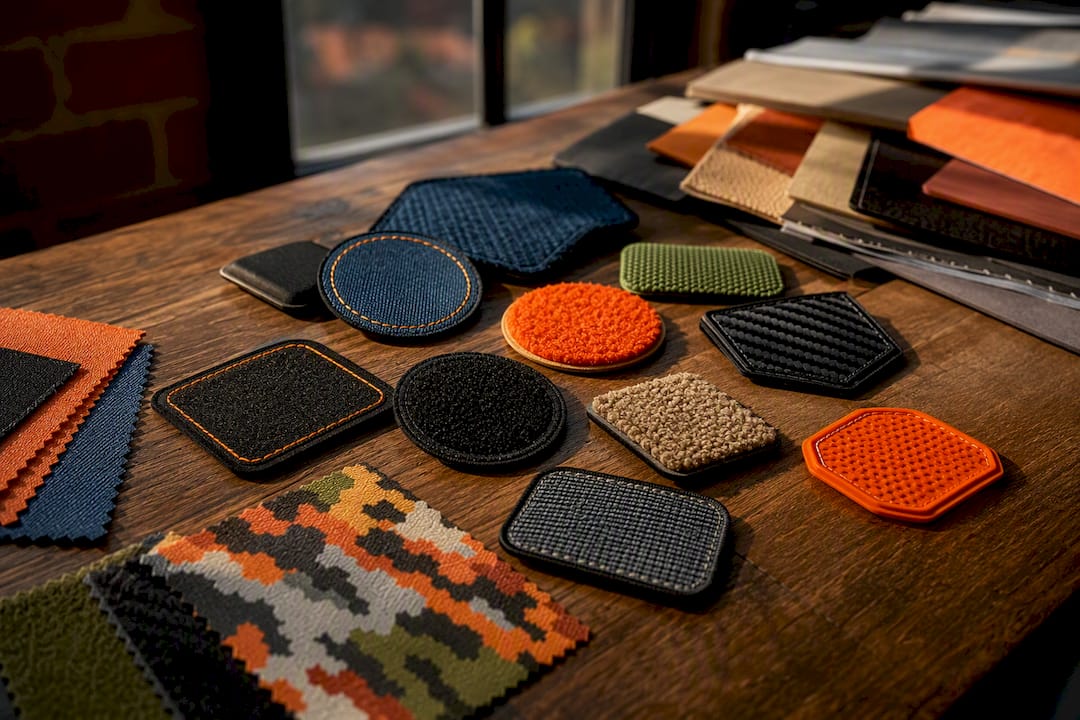
Borders and backings change the application story too. Merrowed (overlocked) borders on embroidered patches need sewing or iron-on backing. Heat-applied faux-material patches, including leather, denim, and carbon-fiber finishes, skip sewing altogether and bond directly with a household iron or heat press. That’s a meaningful advantage if your buyer has no sewing equipment, which describes most solo apparel decorators and hobbyist customers.
How Do You Prepare Design Files for Patch Production?
Getting your artwork production-ready before you send it to a manufacturer saves you rework fees and shipping delays. Most producers want vector files (AI, EPS, or SVG) rather than raster images like JPEGs, because vectors scale cleanly to any patch size without pixelation. If your only file is a raster logo, expect a manufacturer to charge a small vectorizing fee or offer a professional design setup service to convert it properly.
Color guidance matters more than most first-timers expect. Embroidery and woven methods are limited to the thread colors a producer stocks, typically 20 to 40 standard shades, so a gradient-heavy logo won’t translate the same way it does in a heat-applied or DTF format, which reproduces full color accurately.
Digitizing is the process of converting artwork into a stitch file for embroidery machines, and stitch count directly affects both cost and how fine your detail can be. A file with too many small text elements at a low stitch count will blur into an unreadable smudge on the finished patch.
Before sending any file to production, run through this checklist:
- Confirm the file is vector, not raster, unless you’re paying for a conversion service.
- Verify all colors match the producer’s available palette or faux material texture options.
- Request a digital mockup proof before authorizing the full production run.
- Check that small text stays above a minimum height (usually a quarter inch) so it doesn’t disappear in stitching or heat-transfer.
- Confirm border and backing type match your intended application method.
Pro Tip: Always request a mockup with the exact background color of the garment you’ll apply the patch to. A logo that looks perfect on a white mockup can disappear on black denim.
Printful’s patch guide walks through the same file-prep logic in more detail, and it’s worth a read if you’re digitizing your first design in-house.
Should You Outsource Production or Bring It In-House?
Outsourcing wins for nearly every founder in year one. Low startup capital, no equipment to maintain, and the flexibility to test multiple methods, embroidery for one client and heat-applied for another, without buying five different machines.
In-house production starts making sense once volume becomes predictable. Here’s the rough checklist for when to invest in your own equipment:
- You’re consistently placing more than 500 to 1,000 units a month with a single manufacturer.
- Your margin math shows equipment payback within 12 to 18 months of steady orders.
- You have physical space for a machine, ventilation for adhesives or heat presses, and someone trained to run and maintain it.
- Your lead-time requirements have gotten tight enough that outside vendors can’t keep up.
The operational cost of going in-house is often underestimated. A commercial embroidery machine needs regular maintenance, a trained operator, and floor space that most home-based founders don’t have early on. A heat press for faux-material patches is far cheaper and more compact, which is part of why so many small apparel brands start there instead of embroidery.
When you do vet a manufacturer, whether for your first order or a backup supplier, check:
- Minimum order quantity and whether it flexes for repeat customers.
- Sample turnaround time and cost before committing to a bulk run.
- Stated lead time for production, separate from shipping time.
- Quality control process, including whether they photograph or inspect before shipping defective batches.
How Do You Price Patches for Profit?
Your per-unit cost has four components: base material and production charge, digitizing or setup fee (usually one-time), packaging, and shipping. Add those together, then apply a markup, and you have your retail price.
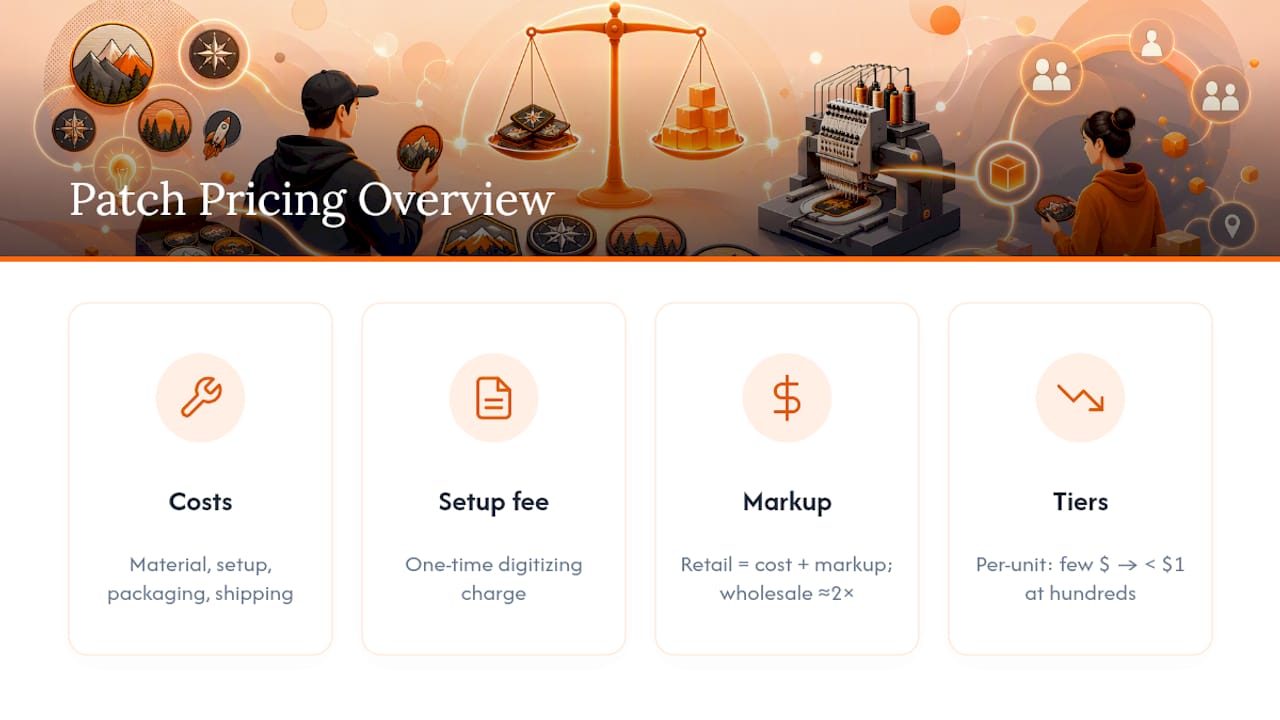
Wholesale or bulk-order clients typically get a lower markup, closer to 2x, since they’re buying at scale.
Quantity tiers matter because per-unit cost drops sharply as volume rises. Patches4Less’s published pricing shows this pattern clearly: embroidered patches priced in the range of a few dollars each at low quantities can drop to well under a dollar per unit once orders climb into the hundreds. Build at least three tiers into your own pricing page (small batch, mid-volume, bulk) so buyers self-select into the right order size.
Common surcharges to build into your pricing model include additional fees for expedited turnaround, premium backing upgrades such as iron-on plus Velcro combinations, faux material upgrades like leather or denim textures, and larger-than-standard patch sizes.
Don’t forget packaging and shipping in your unit economics. A padded envelope and a branded card add real cost per order, often $1 to $2, and cutting that corner shows up immediately in customer perception.
Which Sales Channels Actually Move Patches?
Shopify, Etsy, and social selling each serve a different stage of your business, and most successful patch sellers use two of the three rather than betting everything on one.
- Shopify with an embedded designer tool works best once you have a defined niche and want full control over branding, pricing, and customer data. It’s the strongest long-term platform but requires you to drive your own traffic.
- Etsy brings built-in search traffic from buyers already looking for custom or novelty patches, making it the fastest way to get your first sales without ad spend, though you’re competing on Etsy’s terms and paying transaction fees.
- Social selling, particularly Instagram and TikTok, works exceptionally well for patches because the product is visual and the production process itself is compelling content. Short videos showing a blank patch go from digital file to finished, heat-applied product tend to outperform static product photos for engagement and conversion.
Beyond organic content, targeted outreach to niche communities, motorcycle club forums, sports team booster groups, uniform suppliers, often converts better than broad paid ads, because you’re reaching people who already have a documented need. Basic Google Shopping listings can supplement this for buyers actively searching “custom patches” by name.
Pro Tip: If you sell on more than one channel, keep a single master file naming system for every design. Nothing kills a small operation faster than shipping the wrong revision because Etsy and Shopify had different file versions.
Selling across multiple channels also means your order queue needs one consistent source of truth. Without it, you’ll double-produce or miss orders entirely once volume passes a handful of orders a week.
How Should You Handle Fulfillment and Packaging?
A typical order flow looks like: order received, file matched to the correct design revision, production (in-house or by your partner), quality check, packaging, and ship. The most common bottleneck is step two, matching the order to the right file version, especially once you’re running promotions across Etsy, Shopify, and social simultaneously.
Packaging doesn’t need to be expensive to look premium. A kraft paper mailer with a branded sticker, or a small header card the patch clips onto, adds perceived value for just a few cents per unit. For founders scaling toward retail-ready packaging, BlackSea LOGI’s packaging concept resources offer technical specs worth reviewing before committing to a print run.
Standard shipping via padded envelope keeps costs low, typically a few dollars domestically, since patches are lightweight and don’t require box packaging. Build a simple SOP for quality checks (inspect every unit before it ships) and returns (replace defective units at no cost, but require photos before authorizing a reship) so you’re not improvising policy on the fly.
What Do You Need to Legally Set Up a Patch Business?
Before you take your first paid order, put together a one-page business plan covering your value proposition, target customers, startup costs, and a rough revenue forecast. The U.S. Small Business Administration’s business plan guide walks through this structure step by step and is worth using as your template rather than starting from a blank page.
For entity formation, both GoDaddy’s LLC setup guide and Forbes Advisor’s 7-step LLC breakdown cover the same core steps: choose a name, file articles of organization, get an EIN, and open a dedicated business bank account.
- Open a separate business checking account before your first sale, even if you’re a sole proprietor.
- Use simple bookkeeping software from day one rather than reconstructing records at tax time.
- Ask about general liability insurance once you’re shipping physical products regularly.
- Budget separately for your first sample orders and initial marketing spend so neither eats into production capital.
How Do You Attach and Care for Patches?
Attachment method depends entirely on the backing your patch was made with, and mismatching them is the most common customer complaint in this business. Sew-on patches need a needle and thread or a sewing machine, and work best on garments that get heavy wash cycles, since stitching outlasts adhesive under repeated friction.
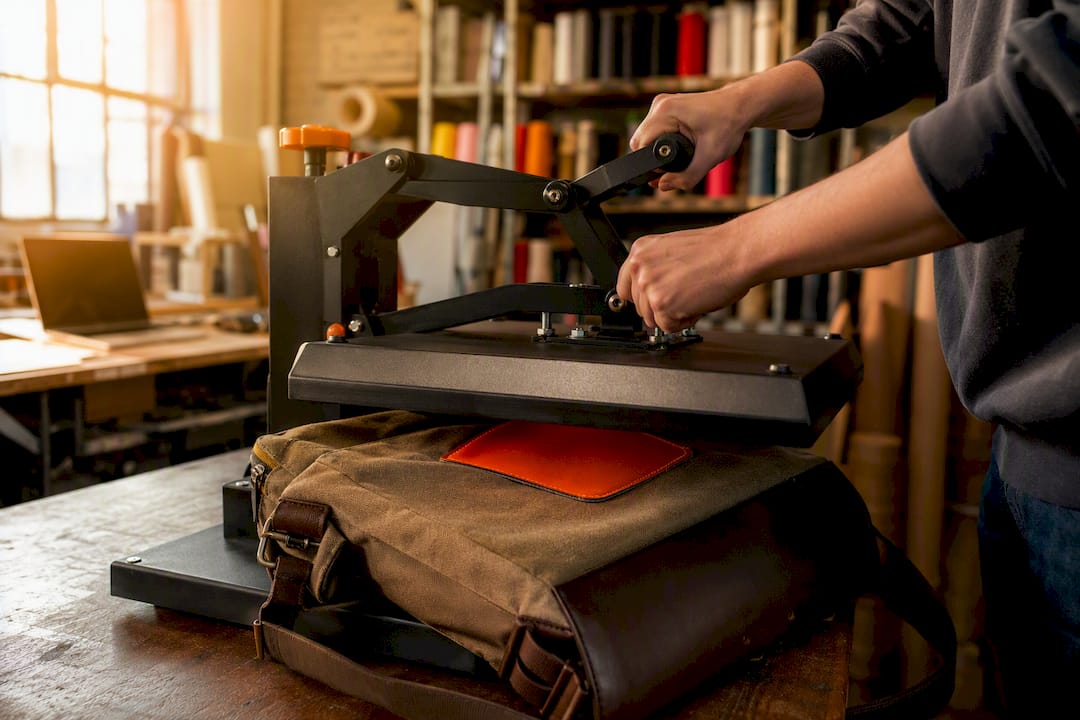
Iron-on backings use a heat-activated adhesive that bonds when pressed with a household iron or heat press, typically at medium-high heat for 20 to 30 seconds with firm, even pressure. Heat-applied faux-material patches, like the leather, denim, and carbon-fiber styles Octopatches produces, use this same principle but bond faster and more evenly with a proper heat press, which is why they’ve become popular with small apparel decorators who don’t sew. Full application guidance, including recommended temperatures and pressure times, is worth reviewing in Octopatches’s instructions page before your first batch ships to customers.
Velcro backings suit removable use cases, tactical gear, uniforms that swap patches by rank or unit, and don’t require heat or sewing at all.
Care instructions should travel with every order. Machine wash cold, avoid high-heat dryers (which can soften adhesive bonds over time), and skip ironing directly over an applied patch, since that can lift edges or scorch faux material finishes. Including a small care card with every shipment cuts down on “my patch fell off” complaints dramatically, and it’s one of the cheapest customer service investments you can make.
What Legal Issues Come Up in the Patch Business?
Copyright and trademark problems show up faster in the patch business than most new sellers expect, because patches are, by nature, reproductions of logos, characters, and brand marks that customers request. If a customer sends you a design featuring a copyrighted cartoon character or a trademarked sports team logo and asks you to produce it, fulfilling that order without a license from the rights holder exposes both you and the customer to infringement claims.
The safest practice is treating custom orders the same way a print shop treats them: you’re providing a manufacturing service, and the customer represents that they own or have rights to the design they submit. Put that representation in writing in your terms of service. It won’t eliminate liability entirely, but it establishes that you relied on the customer’s assurance in good faith.
For your own designs and brand name, register your trademark once you’ve settled on a business name and logo you plan to use long-term, rather than waiting until a competitor forces the issue. Copyright protection for your own original patch designs exists automatically the moment you create them, but registering with the U.S. Copyright Office gives you stronger legal standing if someone copies your work later.
Parody and fan art occupy a genuinely gray area. Selling patches that reference a popular show or band without a license carries real risk even if the design is transformed or stylized, and “everyone else is doing it” isn’t a legal defense. When in doubt on a specific design, a quick consultation with an intellectual property attorney costs far less than a cease-and-desist response later.
How Do You Find Reliable Suppliers for Patch Materials?
Material quality is what separates a patch that looks premium from one that looks like a party favor, and it starts with vetting your supplier before you commit to a large order. Request physical samples before any bulk commitment, not just digital mockups, because color accuracy and texture feel very different in hand than on a screen.
Ask potential suppliers pointed questions: What’s their actual minimum order quantity, and does it flex down for a first-time buyer testing the waters? What’s their real production lead time, separate from marketing claims? Do they offer a sample pack at low cost so you can evaluate faux material options like leather, denim, and carbon fiber side by side before committing to a design run?
Reliability matters as much as price. A supplier that’s $0.30 cheaper per unit but misses lead times consistently will cost you far more in lost sales and refunds than the savings are worth. Build a shortlist of two or three vetted suppliers rather than depending on a single source, so a stockout or quality issue with one doesn’t halt your entire operation.
How Should You Handle Custom Orders and Returns?
Custom orders live or die on clear communication before production starts, not after. Send a digital proof for every custom design and require explicit written approval before you commit materials, because a customer who approves a proof has far less standing to dispute the finished product later.
Set expectations up front on turnaround time, revision limits (most shops allow two free rounds before charging for additional changes), and what happens if a customer wants changes after production has already started. A clear cutoff point, once a design moves to production, changes require a new order, prevents scope creep from eating your margin on every custom job.
For returns, defective or misprinted patches should be replaced at no cost, typically with a photo requirement to confirm the defect before authorizing a reship. Buyer’s remorse on a correctly produced custom design is a different situation entirely, and most patch sellers reasonably exclude custom, made-to-order items from standard return policies, since the item can’t be resold to another customer. State that policy clearly at checkout, not buried in fine print, so it never becomes a surprise during a support conversation.
When and How Should You Scale a Patch Business?
Scale after demand proves itself, not before. Adding a second production method or a new product line (patches expanding into embroidered hats, keychains, or pins) before your core niche has consistent repeat orders spreads your attention thin and usually hurts quality on the products that were already working.
The clearest signal to expand product lines is when existing customers start asking for adjacent products you don’t currently offer. That’s market research you didn’t have to pay for. Expanding production capacity, whether that means a second supplier relationship or your first in-house machine, should follow the same logic covered earlier: when volume is consistent and the payback math works, not when you’re feeling optimistic about next quarter.
Diversifying sales channels is often a lower-risk scaling move than diversifying products. Adding a wholesale arm for uniform suppliers or apparel decorators, on top of your direct-to-consumer sales, spreads revenue risk without requiring new production capabilities you haven’t already mastered.
How Do You Manage Cash Flow in a Patch Business?
Custom manufacturing businesses live and die on cash flow timing, because you’re often paying suppliers before customers fully pay you, especially on larger bulk orders that require deposits. Track three numbers weekly at minimum: cash on hand, outstanding customer invoices, and upcoming supplier payments due.
Simple bookkeeping software, even a straightforward spreadsheet in your first few months, beats reconstructing a year of transactions come tax season. Separate your business and personal accounts from day one; mixing them is the single most common mistake that turns a manageable tax filing into a nightmare.
Budget conservatively for your first two to three months, since revenue in a new patch business tends to arrive in lumps (a wholesale order here, a viral social post there) rather than a smooth weekly curve. Keep a cash reserve equal to at least one month of your typical supplier costs, so a slow month doesn’t force you to delay a customer’s order while you wait on incoming payments.
Publisher Perspective: How Octopatches Helps Founders Launch Fast
We built Octopatches around one problem we kept seeing: founders wanted to test a patch idea without committing to a minimum order they weren’t sure would sell. Our heat-applied patches come in faux leather, denim, carbon fiber, and other materials most embroiderers can’t touch, and every design ships without a minimum order requirement.
The founders who get the most value fastest are the ones testing a niche before scaling it, apparel decorators trying a new material, small brands validating a logo before a bulk uniform order. If you’re still deciding whether your niche will buy, start with a sample pack before you commit to production runs.
Octopatches: The Fastest Way to Test Your Patch Idea Before You Commit Capital
Contract manufacturers and in-house embroidery both ask you to commit before you know if your design sells. Octopatches flips that: no minimum order, faux materials your competitors can’t easily match, and heat-applied application that skips sewing entirely, so you can put a real, finished sample in a customer’s hands within days, not weeks.
That speed matters most in the validation phase this article has walked through. Rather than ordering 100 embroidered units to test a niche, order a sample pack across a few materials and see which one your target buyer actually responds to. Once you know, compare patch styles to lock in your final material, or send your artwork to professional design setup if it needs cleanup before production. When you’re ready to place your first real order, head to the custom patches page and get your design into production today.
Sources
- Write your business plan | U.S. Small Business Administration
- Complete Guide to Running a Custom Patch and Product Business in 2026 | Patch It Up Pro
- How to make custom patches: Your ultimate guide to design, creation, and sales | Printful